What does “dual diagnosis vs rehab” really mean?
When people talk about dual diagnosis vs rehab, they are asking, “Do I just need a normal rehab program for drugs or alcohol, or do I also need mental health help at the same time?”
-
Rehab usually means treatment for substance abuse, like alcohol, opioid, or other drug problems.
-
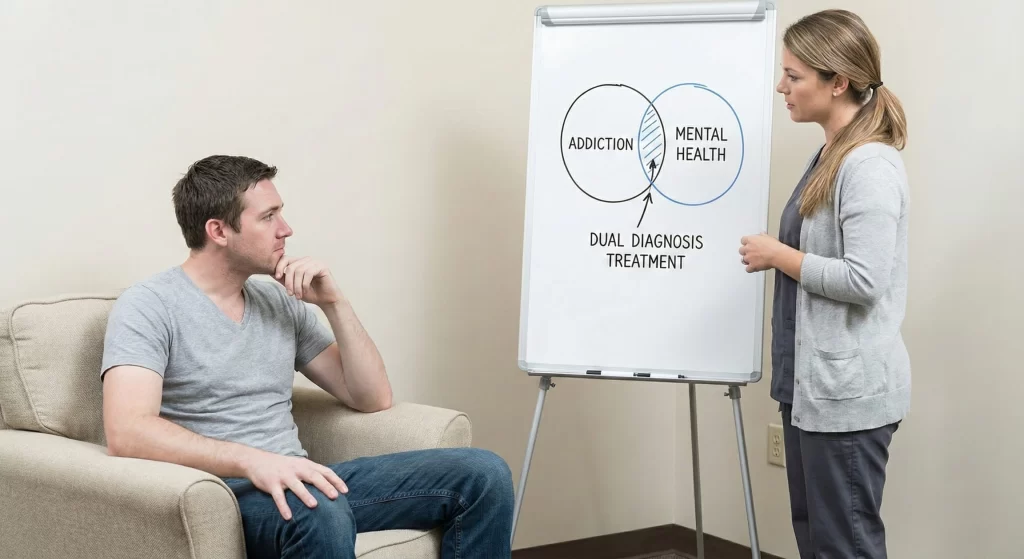
Dual diagnosis means a mental health disorder and a substance use problem are both happening in the same patient.
For example, a person might have:
-
Alcohol addiction and depression
-
A bipolar disorder and opioid abuse
-
Schizophrenia and meth or other substance dependence
When a health professional or mental health professional sees both mental health issues and substance abuse together, this is called comorbidity. Dual diagnosis treatment looks at the whole mind, body, and behavior, not just the drug or alcohol use.
How is dual diagnosis different from regular rehab programs?
How does regular rehab usually work?
In a more “standard” rehab program, the main focus is on the substance use problem:
-
Helping the person stop using drugs or alcohol
-
Teaching basic coping skills to avoid relapse
-
Giving support for early sobriety
This kind of rehab might be:
-
Inpatient (you stay at the center 24/7)
-
Outpatient (you go to groups and therapy but sleep at home)
Some standard rehabs talk about mental health, but they may not treat mental health disorders in a deep way. They might not be ready to handle things like psychosis, severe anxiety disorder, personality disorder, or strong mood disorder symptoms.
How does dual diagnosis treatment go further?
Dual diagnosis treatment goes a step deeper. It understands that mental health conditions and addiction can feed each other. The program:
-
Treats addiction and mental health issues at the same time
-
Uses a full evaluation to understand all the disorders going on
-
Works on both behavior and cognition (how the mind thinks and feels)
-
Plans care with both mental health treatment and addiction care together
So, dual diagnosis is not “just rehab.” It is rehab plus focused treatment for mental disorders like bipolar disorder, schizophrenia, anxiety disorder, and other mental health conditions.
Why do mental health and addiction often happen together?
What is comorbidity and why does it matter?
When someone has more than one disease or disorder at the same time, doctors call this comorbidity. With dual diagnosis, the comorbidity is usually:
-
A substance abuse or substance dependence problem
-
One or more mental health disorders
The prevalence (how common it is) of this mix is high. Many people in treatment centers for drugs or alcohol also have mental health disorders, like:
-
Anxiety disorder
-
Bipolar disorder
-
Personality disorder
-
Schizophrenia or other forms of psychosis
-
Other mental health conditions
These problems can make stress worse, affect motivation, and change a person’s behavior and choices. This is why dual diagnosis care is so important for long-term recovery.
What happens first in a dual diagnosis evaluation and diagnosis?
How does evaluation work before treatment starts?
Before a dual diagnosis program begins, a health professional or mental health professional will do a careful evaluation. They may ask:
-
What substances are you using (alcohol, opioid, other drugs)?
-
How often and how much do you use?
-
What mental health symptoms do you have (anxiety, mood swings, hallucinations, strong fears)?
-
Have you ever been told you have a mental disorder or other diagnosis before?
The goal is to see the whole picture of the person’s mental health, addiction, and life situation. This helps build a treatment plan that fits the patient, not just the disease.
What kinds of therapy and medication are used in dual diagnosis?
How does therapy help both mental health and addiction?
In dual diagnosis, therapy is key. Some common types include:
-
Dialectical behavior therapy (DBT) for strong emotions, self-harm behaviors, and relationship problems
-
Cognitive-behavioral therapy (CBT) to change unhealthy thoughts and behavior
-
Trauma-focused therapy if there is past abuse or trauma
Therapy helps with:
-
Learning coping skills
-
Handling stress in healthy ways
-
Improving cognition, or how a person thinks and makes choices
-
Building motivation to stay in treatment and keep working on recovery
How does medication fit in?
Sometimes a mental health professional or doctor will suggest medication to help with:
-
Anxiety or anxiety disorder
-
Mood disorder like depression or bipolar disorder
-
Psychosis from schizophrenia or other mental health conditions
Medication, when used in a safe way, can support the brain and help the patient focus better in therapy and in daily life. It is usually part of a bigger program that includes therapy, peer support, and healthy habits.
How is dual diagnosis care different in inpatient vs outpatient rehab?
What happens in inpatient dual diagnosis treatment?
In inpatient dual diagnosis treatment, a person lives at the treatment center for a period of time. This might be best when:
-
The substance dependence is strong
-
There is risk of medical problems or relapse
-
There are serious mental health issues like psychosis, suicidal thoughts, or unsafe behavior
Inpatient care may include:
-
24/7 support from nurses and other health professionals
-
Daily therapy groups and individual sessions
-
Help with medication and safety
-
Education about health, addiction, and mental health disorders
What happens in outpatient or PHP dual diagnosis care?
In outpatient dual diagnosis or a PHP (partial hospitalization program), the person spends many hours a week at the program, but sleeps at home. This can work well when:
-
The person is medically stable
-
They have some support at home
-
Their mental health conditions are more controlled
Outpatient and PHP dual diagnosis often include:
-
Group therapy that combines addiction and mental health topics
-
Family education and peer support
-
Skills training for coping, stress, and sobriety
-
Planning for school, work, and community life
Both inpatient and outpatient dual diagnosis programs aim for the same thing: long-term recovery in both mental health and addiction, not just short-term detox.
Who is dual diagnosis treatment really for?
What mental health disorders often show up with substance abuse?
Dual diagnosis treatment is for people who have both substance problems and serious mental health disorders. Some common mixes are:
-
Alcohol or drug addiction with anxiety disorder
-
Opioid or alcohol abuse with bipolar disorder
-
Stimulant or alcohol use with schizophrenia or other psychosis
-
Various drugs with personality disorder or other mental health conditions
Sometimes the person has had mental health symptoms for years. Other times, the mental health issues seem to start after years of substance abuse. Either way, both parts need care.
How do insurance and treatment centers fit into your choice?
Many treatment centers now offer dual diagnosis programs. When looking at dual diagnosis vs rehab, it can help to ask:
-
Does the center have licensed mental health professionals on staff?
-
Do they treat serious mental health conditions, not just “stress”?
-
Do they work with my insurance?
-
Do they offer a full program of therapy, peer support, medication, and aftercare?
Choosing the right level of care—inpatient, outpatient, or PHP—can make a big difference in safety, comfort, and long-term success.
How can you decide between dual diagnosis vs rehab?
When you or someone you love is struggling, it can feel confusing. A few questions might help:
-
Are there clear signs of mental health issues like strong anxiety, depression, mood swings, hallucinations, or dangerous behavior?
-
Has a doctor ever given a diagnosis like bipolar disorder, schizophrenia, or personality disorder?
-
Have past “normal” rehab attempts failed because the mental health symptoms were not treated?
If the answer is “yes” to any of these, a dual diagnosis program may be safer and more helpful than a standard rehab only. Dual diagnosis focuses on the whole person—their mind, body, and life—not just one part of their struggle.
No matter which path you choose, remember: reaching out for treatment is a strong step toward recovery. You are not alone, and real help is available.